 Sola Adesakin
Most people have one relationship with money. They work, and then they get paid. The month ends, the cycle resets, and they begin again. It is reliable, for as long as it lasts, and that qualifier is the part worth examining.
Because the salary, as dependable as it feels, is the most fragile of the three ways money can come to you. It requires your continuous presence, your continued employment, and a set of conditions entirely outside your control to remain in place.
There are two other ways money moves toward people. And the individuals who understand all three, and deliberately build from one toward the others, are the ones who arrive at genuine financial freedom rather than just financial activity.
The first way is the salary. You already know this one. You show up, you deliver, you get paid. It is linear. Your income is directly proportional to your time and your continued presence in the arrangement. The moment the arrangement ends, whether through resignation, redundancy, illness, or any number of circumstances life does not announce in advance, the income ends with it.
This is not an argument against employment. A salary is an excellent foundation. It funds your life while you build everything else. But it is a starting point, not a destination, and treating it as a destination is where most people get stuck.
The problem is not that people have salaries. The problem is that they have only salaries, and somewhere along the way they stopped there.
The second way money comes to you is through skills. And this is where the conversation gets interesting, because skills behave very differently from employment. A skill, genuinely developed and well positioned, does not clock in or clock out. It does not require a particular employer to remain relevant. It travels with you. It compounds over time. And critically, it can be deployed on your terms, to multiple clients, in multiple contexts, at fees you set rather than negotiate downward.
Think about what this means practically. The accountant who works a salaried job has one income stream. The accountant who also consults for three small businesses on the side has four. The financial educator who speaks at corporate events, runs a training programme, writes a column, and advises private clients individually is drawing from the same core skill set in four different directions. The skill does not get used up. It gets more valuable the more it is applied.
This is why investing in your skills is not an expense. It is the highest-returning investment most people can make, and it is chronically undervalued because the return does not show up on a brokerage statement. It shows up in your earning capacity, your optionality, and your ability to generate income regardless of what any single employer decides.
The third way money comes to you is through assets. And this is the one that changes everything, because assets pay you whether or not you show up. A dividend-paying stock sends you money while you sleep. A rental property generates income while you are on holiday. A money market fund accrues returns on a Sunday afternoon when you are not thinking about it at all. A business that has been systemised beyond your daily involvement earns revenue independent of your hours.
This is not a fantasy, it is a structure. And it is built deliberately, usually starting from the salary that funds the skill development that eventually generates the capital that buys the assets. The three are not competing. They are sequential, and for a period, simultaneous.
The honest question to ask yourself today is: which of these three do you currently have, and which are you building toward? If your only income source disappeared tomorrow, what remains? If the answer is nothing, that is not a judgment. It is a starting point.
Here is your call to action, and it is specific. This month, identify one skill you have that you are not currently monetising and research one way to deploy it beyond your employment. Simultaneously, open or review one investment account and ensure money is moving into it consistently, however modest the amount.
These are not big moves, they are the right moves. And they are the beginning of a financial life that does not depend entirely on a single arrangement remaining intact.
A salary pays you monthly. Skills keep paying you, anytime. Assets pay you even when you are asleep.
Know the difference, then build accordingly.
About Author
Sola Adesakin
Sola Adesakin is a highly respected wealth coach and chartered accountant with over two decades of transformative impact in the finance industry. As the visionary founder of Smart Stewards Financial Advisory Limited and Smart Stewards Advisory LLC, she has revolutionized the financial wellbeing of countless individuals and businesses across 40 countries. Her methodical approach to ‘make-manage-multiply’ money principles has elevated many from financial stress to prosperity, and mediocrity to exceptional achievement.
Latest Edition of IWA Magazine
September 22, 2026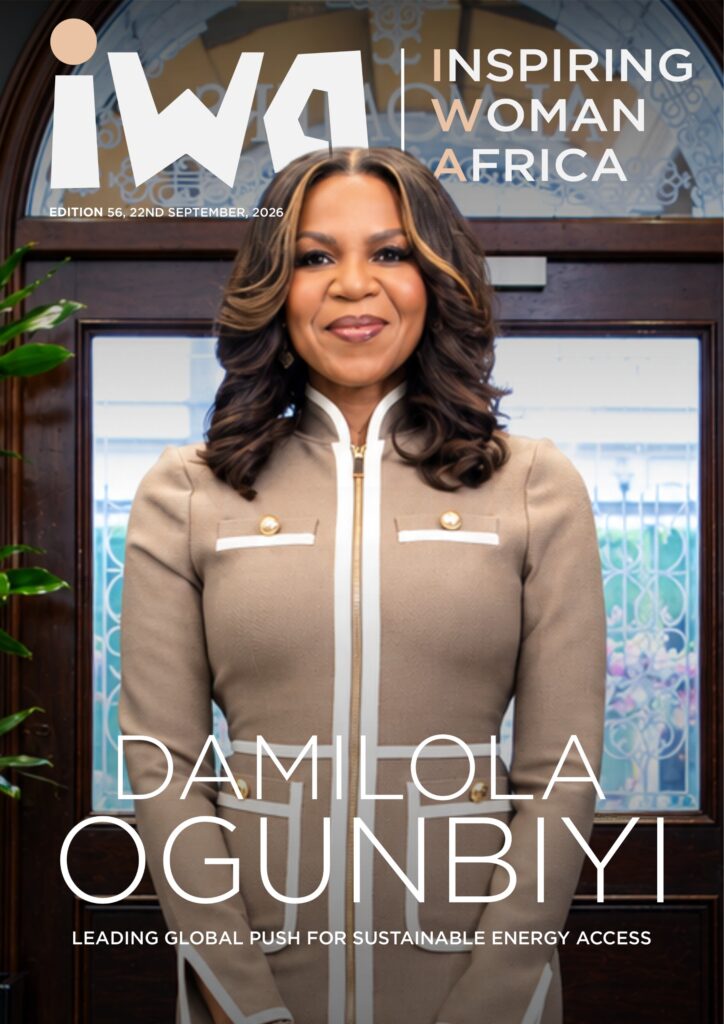
Damilola Ogunbiyi, Leading Global Push For Sustainable Energy Access
Latest Posts
-
 Sep 22, 2026 Stop Measuring Your Life With Someone Else’s Ruler