 Dr. Maymunah Yusuf Kadiri
In today’s world, exhaustion has become so normal that many people no longer recognize it as a warning sign. Fatigue is dismissed as “just work,” disconnection is excused as “being busy,” and imbalance is worn as a badge of productivity. But beneath this normalization lies a deeper truth—modern life is quietly pulling many people out of alignment with themselves. Wellbeing is not collapsing because people do not care about their health. It is collapsing because life has become fragmented.
Consider the experience of a young professional navigating the realities of remote work. What initially appeared to be a flexible and convenient lifestyle slowly transformed into something far more complex. The boundaries between work and rest disappeared. Days blended into nights. Routine gave way to randomness. And over time, the effects began to show, not just physically, but mentally and emotionally.
Fatigue became constant. Motivation declined. Personal care slipped. Social interactions reduced. What was once a vibrant and engaged individual gradually becoming withdrawn, exhausted, and disconnected from herself. This is not an isolated experience. It reflects a larger shift in how we live. The challenge is not simply stress or workload. It is the loss of rhythm.
Holistic living is built on rhythm—the natural balance between activity and rest, engagement and withdrawal, productivity and recovery. When this rhythm is disrupted, the human system begins to falter. Sleep becomes irregular. Eating patterns shift. Movement decreases. Emotional resilience weakens. And slowly, the individual begins to feel out of sync with life itself.
What makes this particularly significant is that these changes rarely happen suddenly. They accumulate. Small disruptions, repeated over time, become patterns. And patterns, left unaddressed, become lifestyles. The turning point in restoring wellbeing is not perfection. It is awareness.
Recognising that imbalance exists is the first step. From there, restoration becomes possible, not through extreme measures, but through intentional, consistent adjustments.
Movement is often the easiest place to begin. Not as structured exercise alone, but as a return to using the body regularly. Short breaks, stretching, walking, and simple physical activity help to reset both the body and mind. These moments of movement are not interruptions; they are essential recalibrations.
Equally important is the role of self-care, often misunderstood as luxury or indulgence. In reality,self-care is maintenance. It is the daily act of preserving one’s energy, identity, and sense of self. Simple practices such as grooming, dressing intentionally, and creating a presentable environment are not superficial, they reinforce self-worth and psychological stability.
Structure also plays a critical role. When life becomes unstructured, stress increases. Establishing clear routines—defined work hours, regular meals, and intentional downtime—creates predictability. And predictability, in turn, reduces mental load and enhances focus. But perhaps one of the most powerful aspects of holistic wellbeing is connection.
Isolation, particularly in remote or digitally dominated environments, can significantly impact emotional health. Reconnecting with others through conversations, shared experiences, and community restores a sense of belonging. And belonging is a fundamental human need, not a luxury.
What this ultimately reveals is that wellbeing is not achieved through isolated actions. It is created through alignment.
Alignment between how we live and what we need.
Alignment between work and rest.
Alignment between independence and connection.
Alignment between doing and being.
When these elements come into balance, something shifts. Energy returns. Clarity improves. Joy becomes accessible again. Not because life has become easier, but because it has become more sustainable. The story of transformation is not about dramatic change. It is about small, intentional choices repeated consistently. It is about reclaiming control over daily rhythms and redefining what it means to live well. In the end, wellbeing is not something we chase occasionally, it is something we build daily. And the most powerful step we can take is this: to stop living in fragments and start living in harmony
About Author
Maymunah Yusuf Kadiri
Dr. MAYMUNAH YUSUF KADIRI (aka DR. MAY) popularly referred to as “The Celebrity Shrink,” is a multiple award winning Mental Health Physician, Advocate & Coach. She is the convener of “The Mental Health Conference” and the Medical Director and Psychiatrist-In-Chief at Pinnacle Medical Services, Dr. Kadiri is a dynamic Consultant Neuro-Psychiatrist and a Fellow of the National Post Graduate Medical College of Nigeria (FMCPsych) with almost 20 years’ experience as a practicing Physician.
The IWA Series 15 Conference is Here
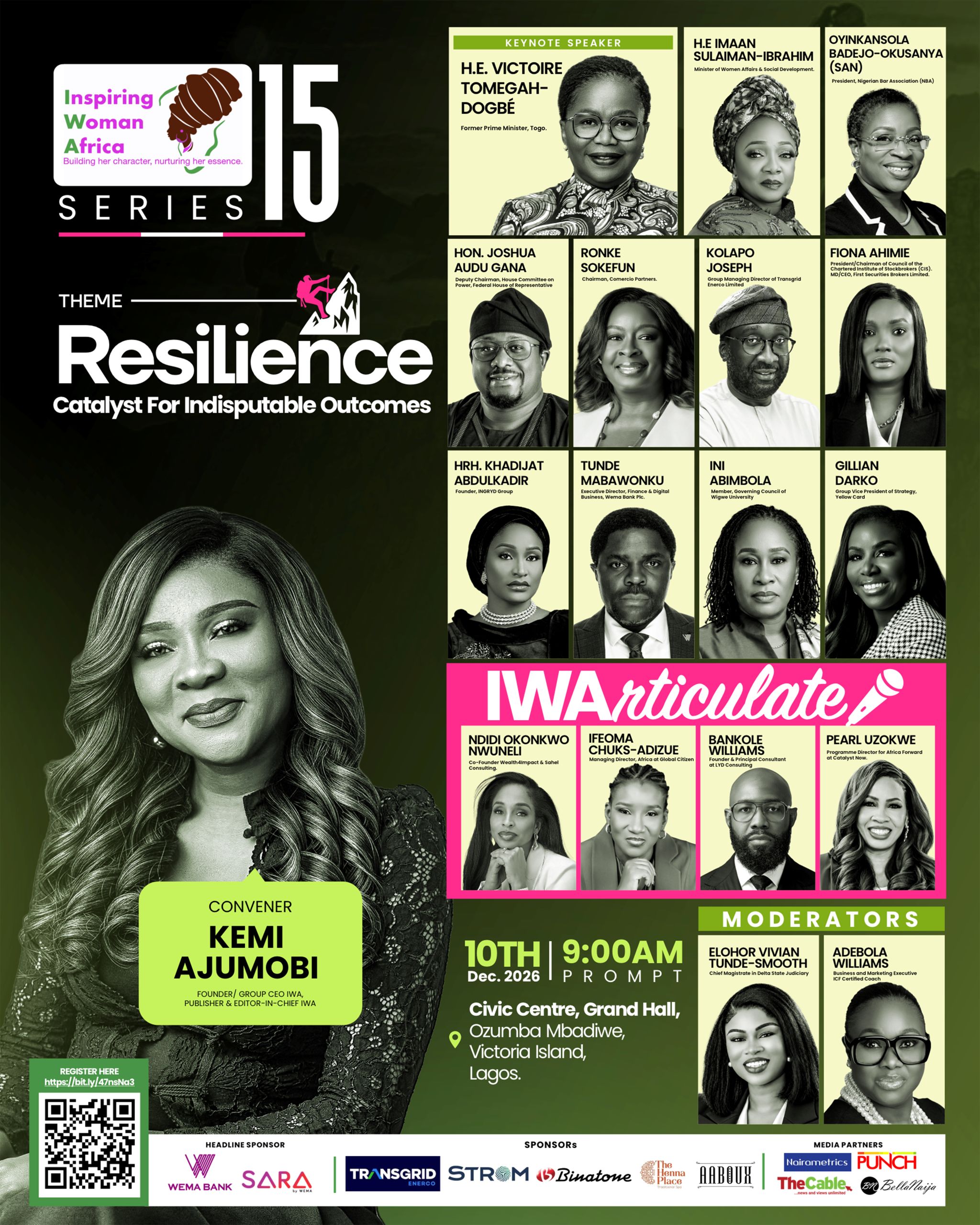
Click To Register
Latest Edition of IWA Magazine
October 20, 2026
Meet the Speakers of IWA Series 15 Conference
Latest Posts
-
 Oct 20, 2026 Hard Conversations: The Skill No One Puts on a CV
 -
 Oct 20, 2026 5 Africa Women Listed as 2026 Forbes Icons
 -
 Oct 20, 2026 You Are Wealthier Than You Think