 Dr. Asmau Benzies Leo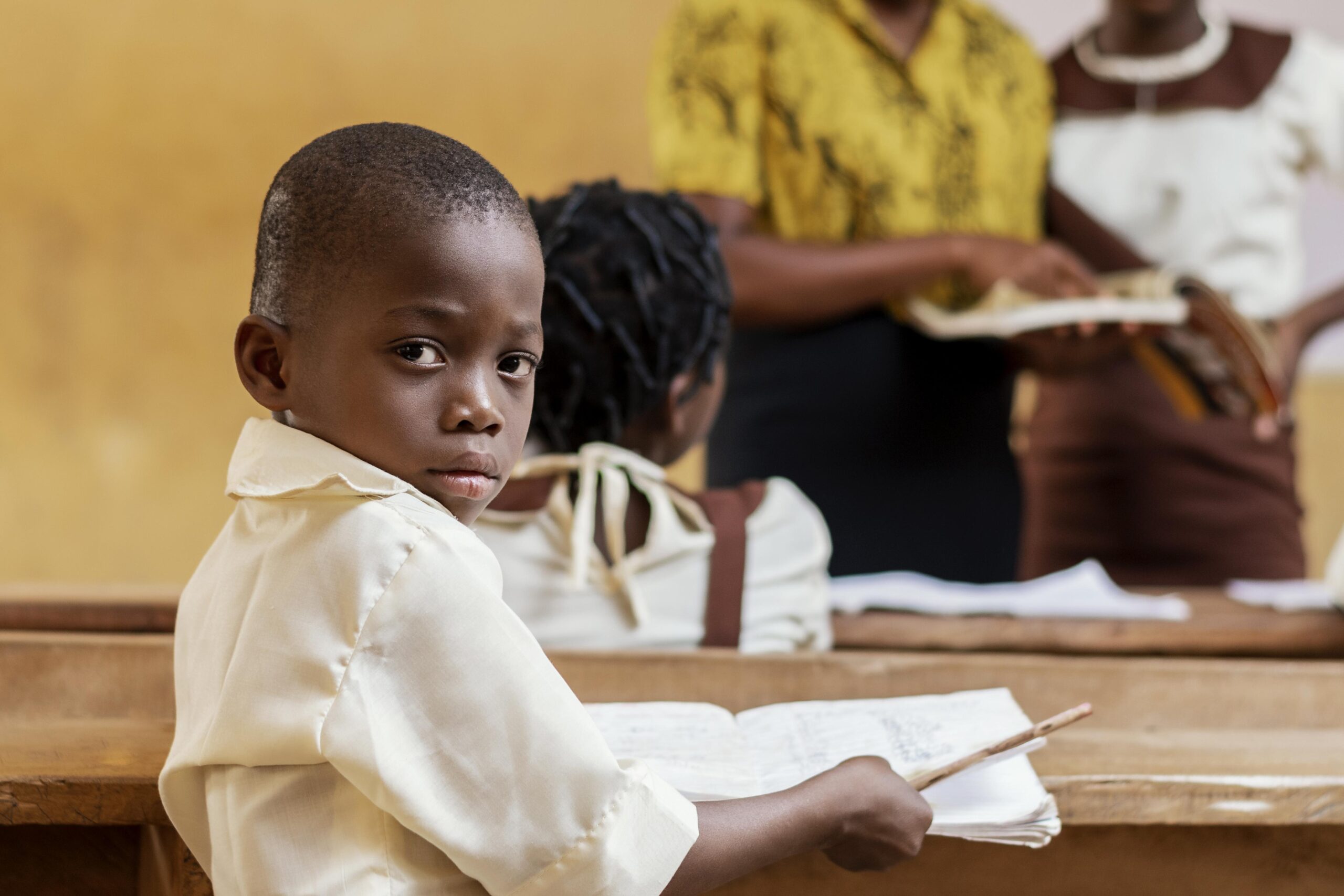
27th of May was Children’s Day. Nigeria marked it with the usual colour and ceremony; marching bands, bright uniforms, speeches filled with hope. But beneath the pageantry laid a painful contradiction: across both the northern and southern regions of the country, schools are no longer safe spaces. For too many Nigerian children, the classroom has become a place of fear.
In recent years, school kidnappings have evolved from isolated incidents into a disturbing national pattern. From the insurgency ravaged communities of the North to the relatively stable towns of the South, no region can now claim immunity. The recent abduction of schoolchildren in Oyo State and repeated attacks in Askira Uba, Borno State, underscore a chilling reality that “Nigeria’s education system is under siege”.
In Oyo, armed men invaded a school, disrupting learning and shattering the illusion that such horrors are confined to distant conflict zones while in Askira Uba, attacks on schools have become tragically familiar, leaving communities traumatised and forcing parents to withdraw their children from education altogether. These incidents are not mere security breaches; they are direct assaults on Nigeria’s future.
Let us be unequivocal: when children are no longer safe in school, the nation has failed in one of its most fundamental responsibilities. Education is not merely a social service, it is a right, a pathway out of poverty, and a cornerstone of national development. Every child forced out of school by fear represents a lost opportunity, a dimmed future, and a weakening of the nation’s human capital.
The implications are profound. School closures, declining enrolment, and psychological trauma are eroding decades of progress in education. Insecurity has created a generation of children who associate learning with danger. For girls in particular, the risks are even more severe, as abduction often exposes them to gender-based violence, forced marriage, and long-term social exclusion.
Nigeria’s commitment to the Safe Schools Initiative and the Safe Schools Declaration, signed in 2015, was meant to address precisely this crisis. Yet, more than a decade later, implementation remains slow, fragmented, and largely ineffective. Policies exist, but protection on the ground is glaringly insufficient.
Our educational system is under attack and this must change, and urgently. What then can we do about this?
First, the Safe Schools Declaration must be domesticated into enforceable legislation across all states. Without legal backing, it remains a moral commitment with no teeth. Governments at both federal and state levels must allocate dedicated funding for school safety and establish clear accountability mechanisms for implementation.
Second, a comprehensive national security audit of schools is imperative. Every school, public and private, rural and urban, must be assessed for vulnerabilities. Security measures such as perimeter fencing, controlled access points, alarm systems, and trained guards should be mandatory minimum standards.
Third, community-based security systems must be strengthened. Local intelligence is often the first line of defence. By integrating community leaders, vigilante groups, and parent associations into formal security frameworks, early warning signals can be detected and acted upon swiftly.
Fourth, technology must be leveraged. Simple but effective tools such as emergency communication systems, GPS tracking for school transport, and rapid response hotlines, can significantly improve response times during crises.
Fifth, survivors of school abductions must receive sustained psychosocial support. Trauma does not end with rescue. Without proper care, affected children may never fully return to normal learning environments. Mental health services must be integrated into school systems, particularly in high-risk areas.
Finally, accountability must be enforced. School proprietors and administrators who fail to meet basic safety standards must face sanctions. The safety of children cannot be optional or negotiable.
Though Nigeria celebrated Children’s Day on the 27th of May 2026, the message must go beyond celebration. It must be a moment of reckoning. A nation that cannot guarantee the safety of its children in schools is a nation at risk of losing its future.
These responsibilities lies with government, security agencies, communities, and indeed all citizens. Protecting schools is not merely a policy issue, it is a moral imperative.
Nigeria must act decisively to reclaim its schools as sanctuaries of learning, not theatres of fear. The time for speeches has passed. What is needed now is action, visible, measurable, and immediate.
Anything less is a betrayal of the very children we claim to celebrate.
About Author
Asmau Benzies Leo
Dr. Asmau Benzies Leo is a development practitioner with extensive national and international expertise in gender equality, peace-building, governance, and humanitarian action. She holds a PhD in Public Governance and Leadership, a Master’s degree in Conflict Management and Peace Studies, and executive certifications from leading institutions including Howard University, Harvard University and Glasgow Caledonian University. As Executive Director of the Centre for Non-violence and Gender Advocacy in Nigeria (CENGAIN), she has led ground-breaking advocacy initiatives on women’s political participation, gender-based violence prevention, and security sector reform across multiple World Bank, UN and EU-supported projects.
Latest Edition of IWA Magazine
September 1, 2026
Ahunna Eziakonwa Becomes Under-Secretary-General, Special Adviser on Africa to the UN Secretary-General
Latest Posts
-
 Sep 1, 2026 Comfort or Capacity?