 Kemi Ajumobi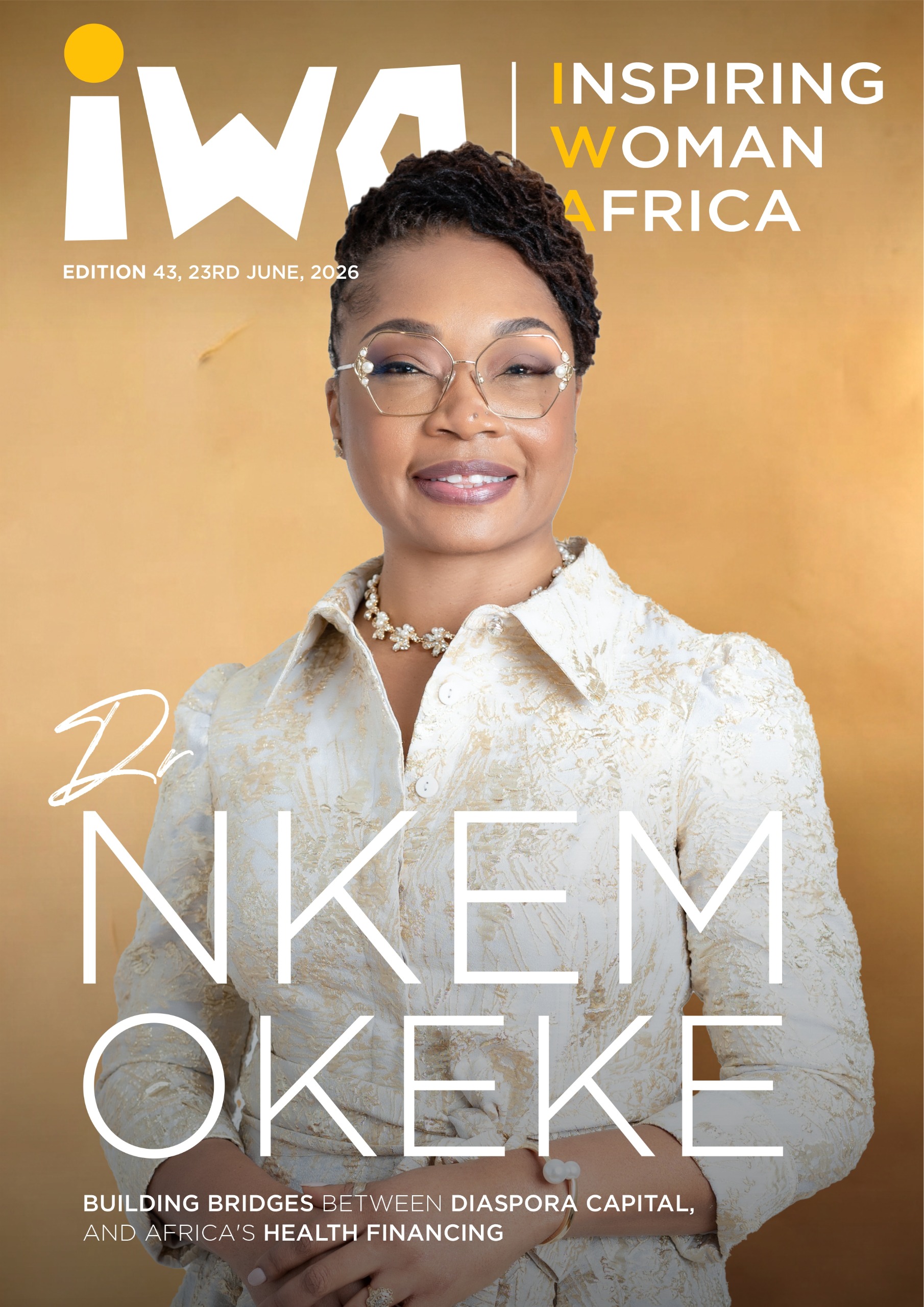
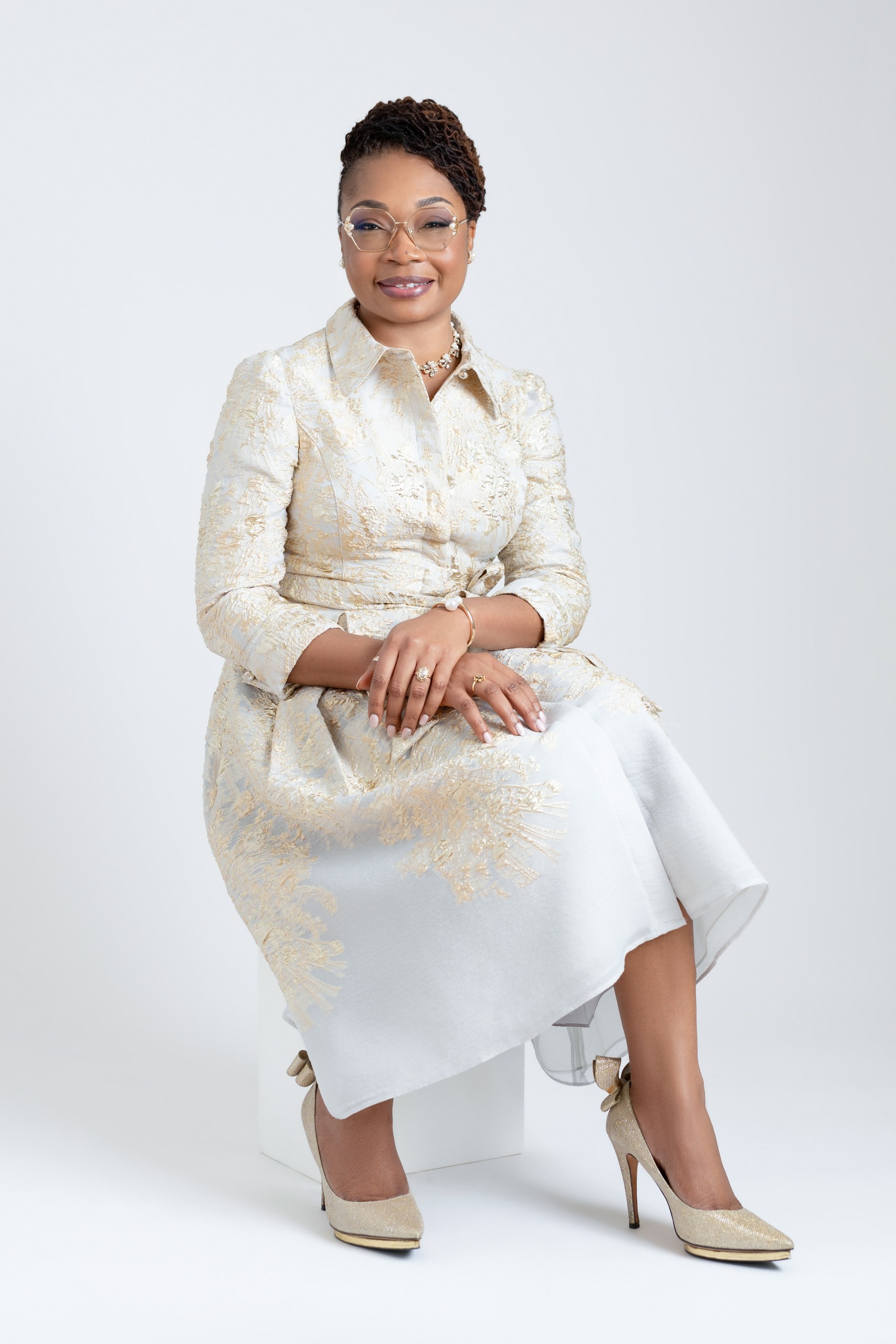
Dr. Nkem Okeke, MD, MPH, MBA, MSPM, CCMP is not a woman who stayed in one lane – and that refusal to be defined by a single title is precisely what has made her one of the most consequential businesswoman and physician executives of her generation.
Born in Pittsburgh, USA and raised in Nigeria, Dr. Nkem entered medical school at sixteen, trained clinically across continents, and went on to build a career that spans clinical medicine, public health, enterprise strategy, and entrepreneurship. She is the Founder and CEO of Medicalincs and Healthlincs — healthcare organisations that advise healthcare leaders, payers, life sciences stakeholders, and public-sector agencies on value-based care, population health, and sustainable innovation. Over the course of her career, she has led transformation initiatives for organisations including prior work at Johns Hopkins Health Plans, CMS, Kaiser Permanente, and Booz Allen Hamilton — generating over $150 million in cost savings and measurable improvements in care delivery across systems serving millions.
But numbers have never been the whole story for Dr. Nkem. Behind the boardroom work is a woman who founded a nonprofit to close the health gaps she witnessed firsthand — and built it into an organisation now serving over 30,000 lives in her region. Her work as a partner and advisor to the Africa CDC, and her two-decade commitment to diaspora-Africa health partnerships reflect something deeper than professional ambition: a belief that the communities she came from deserve the full force of everything she has learned.
An international keynote speaker, member of the Forbes Business Council, and former Harvard faculty affiliate – Dr. Okeke has been recognised with the Healthcare Executive of the Year award, the Healthcare Heroes Lifetime Achievement Award, and the United States President’s Lifetime Achievement Award for Community Service. She is also a mother of three daughters – for whom she consciously models what it looks like to lead without apology.
Dr. Okeke’s life is a testament to what IWA loves to celebrate, that a woman’s story, lived fully and shared boldly, becomes a roadmap for those who come after her. (Read more at NkemMD.com)
Early years and influence till date
I was introduced to two worlds – born in Pittsburgh and raised by Igbo parents who never let go of where they came from. We had a tradition of spending almost every Christmas at my village, Abatete, to the family compound, to my grandmothers, to kola nut ceremonies and masquerades and the particular noise of a house full of cousins. My father played the likes of the Bee Gees, Boney M, and Sonny Okosuns on Saturday mornings while he worked through his files at the dining table, and that image, discipline and joy happening in the same room at the same volume, has never left me.
He also had one rule that shaped me more than almost anything else: top five in your class, every term, or the television privileges disappeared. No negotiation. I pushed against that rigidity privately and was formed by it completely. It taught me that your mind is the one asset you actually own, and that excellence is a discipline, not a personality trait.
My mother, a nurse turned socialite and community leader, was ever so meticulous, organised, and well put together. That taught me everything about presentation, how one presents themselves and the work of their hands.
What growing up in Pittsburgh and then Kaduna with my family really gave me, though, was the early understanding that there is no single correct way to be. I learned to read rooms, to carry multiple truths without contradiction, to move between worlds without losing myself in any one of them. People sometimes describe that kind of code-switching as exhausting. I came to understand it as a competitive advantage, as long as it doesn’t involve falsehood. Everything I have built since, medicine, public health, tech, business, the diaspora work, has required exactly that fluency. I did not choose multidimensionality as a brand, it chose me first, and I simply learned to use it.
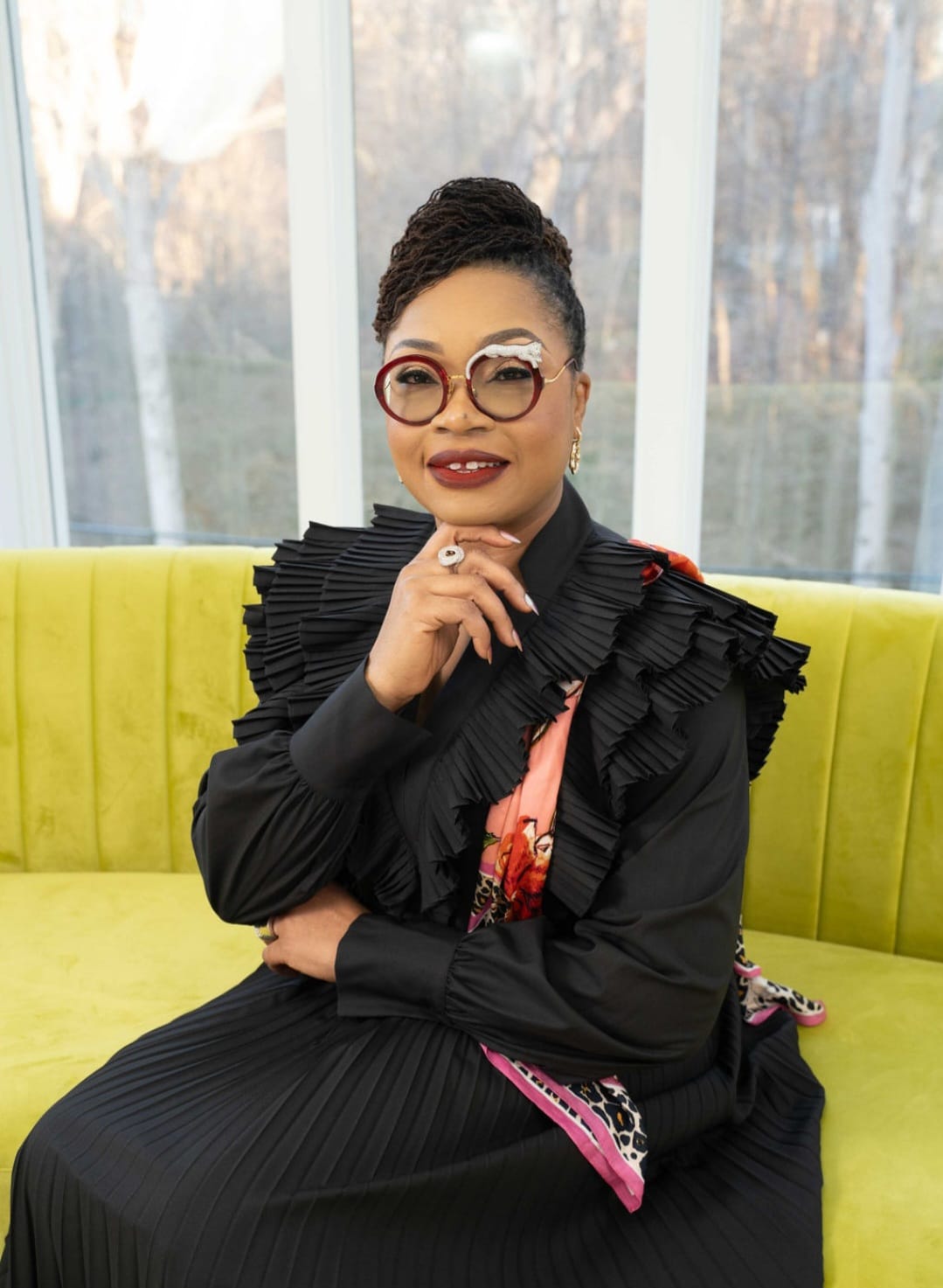
Share a moment from your career when a single decision changed the trajectory of your work across medicine, public health, tech, and entrepreneurship.
I was still in clinical practice, doing exactly what I had trained for years to do, and I kept running into the same wall. A patient needed something, a service, a referral, a device, medications, and the system either could not or would not provide it. I would do everything available to me as a clinician, and then I would watch the outcome get decided by something far upstream of the exam room.
I remember thinking, very specifically: the problem is not at the bedside. The problem is in how these systems are designed, and the people designing them seem to forget the person those systems are supposed to serve.
That was the decision point. I made up my mind that I needed to be in the room where those design decisions actually get made. Not instead of medicine, because of it. So I went and learned the language of that room: an MPH, an MBA, an MSPM. I took on roles at Kaiser Permanente, at Johns Hopkins, at Booz Allen Hamilton, working on the financial architecture and operational systems behind care delivery rather than only the care itself.
People sometimes ask if leaving clinical practice meant I left medicine. I did not. I expanded it, until it could reach the people it was always meant to serve. Every company I have since founded, Medicalincs, Healthlincs, exists because of that one decision to go upstream.
Now I see the world through a sculpted, multidimensional lens, and my life has been better for it.
Imagine a large health system is transitioning to value-based care, but frontline clinicians are skeptical. What will be your approach to earn trust, align incentives, and demonstrate early wins within a few months?
My first move would not be a memo. It would be a walk. In Kaizen Leadership, the philosophy I train leaders in, we call it going to the Gemba, the place where the actual work happens. Before I ask a single frontline clinician to change anything, I want to have stood in their clinic, watched their workflow, and listened to what is actually broken from their point of view, not from a slide deck.
Clinician skepticism about value-based care is almost never about the concept. It is about history, about having transformation arrive as a new mandate stacked on top of an already overloaded day, with none of the administrative burden removed and less of the upside shared. So the sequence matters. In the first ninety days, I am not trying to convince anyone. I am identifying three or four genuine pain points, prior authorisation friction, documentation duplication, referral gaps, and fixing them visibly, fast, with the clinicians who flagged them. That has to be felt before it is explained.
Incentive alignment follows the same logic: tie a fair portion of shared savings or quality bonuses to outcomes clinicians can actually see and influence day to day, not abstract panel-level metrics they have no line of sight into. And measure publicly. A dashboard that shows real movement, fewer readmissions, faster referrals closed, less time on a particular form, in month two or three does more to convert skeptics than any kickoff presentation ever will. Trust in value-based care is not won with a vision. It is won with a Tuesday that is measurably better than the Tuesday before it.
Some say “disruptive innovation” in healthcare hurts more than it helps due to misaligned incentives. How do you ensure that your disruptiveness actually translates into durable, equitable outcomes?
That criticism is fair more often than the innovation sector likes to admit. Disruptive innovation is relative. A lot of disruption in healthcare has been built to extract value from a system rather than build capacity into it, models optimised for exit multiples rather than for the Medicaid mother trying to get her child seen. I have watched promising tools get adopted by the people closest to power and never reach the people who needed them most. That is not disruption. That is the same inequity, with better branding.
In Africa, we see a similar pattern, modeled after the Western health system. In this case, basic health infrastructure is absent and we try to build disruptive innovation on an unstable foundation. A young boy should not die of an asthma attack because we lack adequate, timely emergency healthcare. Disruptive innovation, in this case, requires solving for the basic infrastructure of healthcare first.
The way I protect against that in my own work is structural, not aspirational. At my companies, Medicalincs and Healthlincs, our principle is infrastructure without ego: we never build something without considering whether it duplicates or displaces existing clinical care. We extend it, specifically into the populations, zip codes, and local government areas traditional delivery models have not reached. For example, our AI-powered community health worker model exists because trust is the actual bottleneck in underserved care, and trust cannot be automated away. It has to be staffed, paid, and sustained.
The other discipline is refusing to let innovative and fast override accountable. Every programme we launch is built with the outcome metric defined before the pilot, not after, and reported against a population that includes the people most likely to be left out of the headline. Durable, equitable innovation is slower and less glamorous than disruption. It is also the only kind that survives contact with the communities it claims to serve.
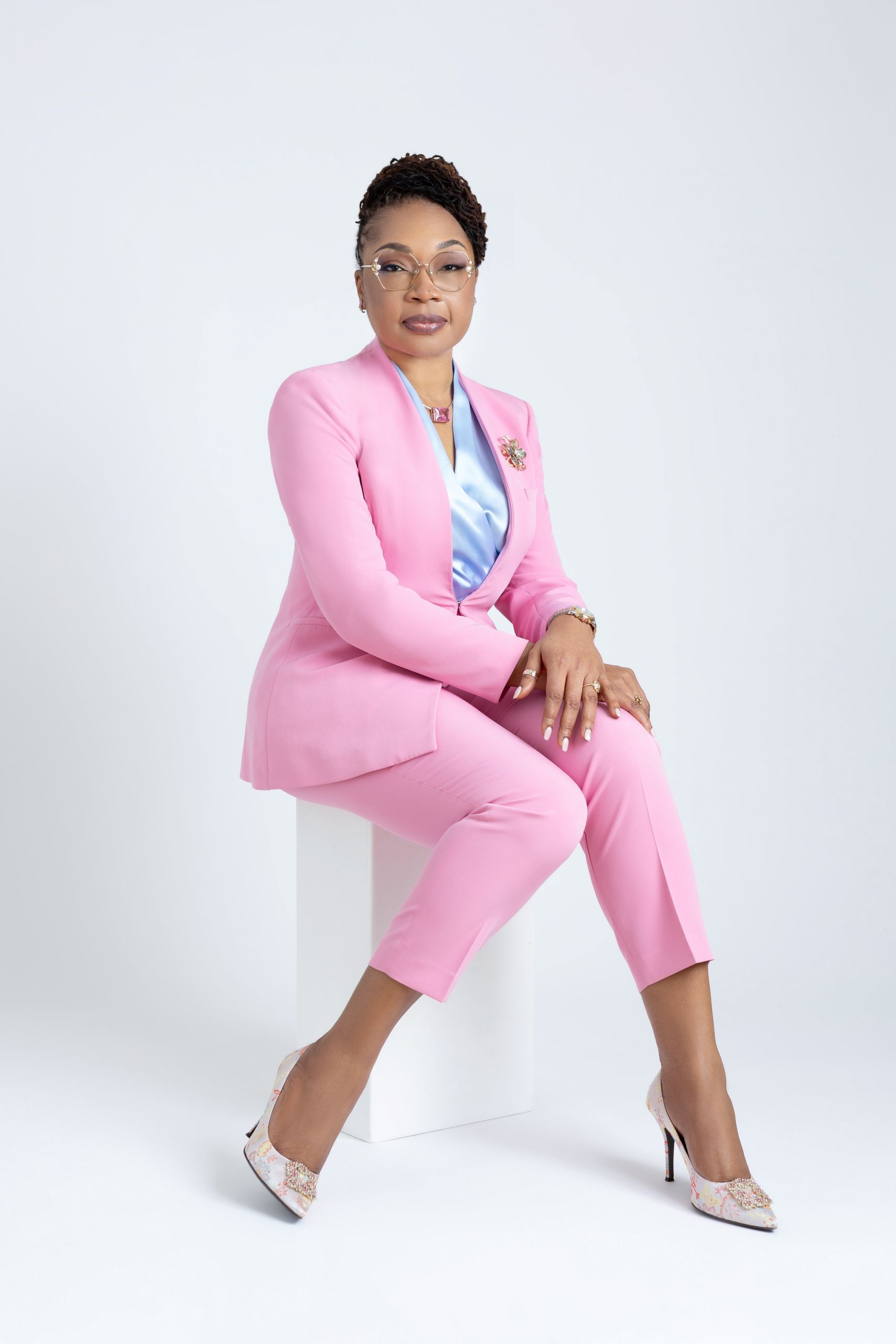
What gap in the healthcare ecosystem did you identify that led to the founding of Medicalincs and Healthlincs?
Medicalincs came first, out of a gap I had seen from inside the system: organisations with billions in revenue and sophisticated value-based payment models still needed support translating those models into what actually happens on a primary care or clinic floor. I had sat in rooms at Johns Hopkins, Kaiser, Booz Allen, and, prior to that, Patelson Hospital in Nigeria, designing the strategy. The gap was never vision. It was the missing bridge between the boardroom and the bedside. Medicalincs exists to be that bridge. Medicalincs extends its support to Africa, in Ghana, through Mytle Health, which provides health financing solutions for comprehensive primary care delivery there.
Healthlincs, on the other hand, exists because of a single afternoon that exposed an even deeper gap. A nurse care manager on my team came to me about a patient who needed a wheelchair that insurance would not cover. We had exhausted every community resource, and she had four more patients in a similar position. I remember asking myself: of what use is everything we have built if this child cannot get a wheelchair to get around? That question had no consulting-firm answer. It needed an organisation that could act immediately, with its own resources, the same week, not after the next contract cycle. I called my accountant, and Healthlincs was founded days later. Two years later, we started co-sponsoring an orthopaedic medical mission to Nigeria, Operation Stand-Walk-Run, providing free, life-changing surgeries for children and adults.
So the honest answer is two gaps, not one: the strategic gap between policy and operations, and the human gap between what a system covers and what a person actually needs. Medicalincs was built to close the first. Healthlincs was built because the first was never going to be enough on its own.
What are the biggest challenges you face as a founder and CEO, and how do you address them?
Running parallel entities is the unglamorous challenge nobody warns you about. Medicalincs is a for-profit Care Transformation Organisation and management consulting firm. Healthlincs is a nonprofit. BIND Associates operates across an entirely different regulatory and cultural context, on another continent. Each one has its own funding cycle, its own compliance calendar, its own definition of urgent. The discipline I rely on is the same one I teach: a Kaizen cadence of small, scheduled, non-negotiable check-ins, rather than waiting for a crisis to force my attention toward whichever entity is loudest that week. Just as important are the pillars I hold on to, namely my leadership team. With the right leadership team in place, guiding us all toward a shared vision becomes far more feasible.
The second challenge is more personal, and I am only fully past it in the last few years: visibility. I grew up being told not to draw attention to your own accomplishments, and that instinct served me for a long time. I built quietly, successfully, almost invisibly. But you cannot grow an enterprise, attract partners, or be trusted with the kind of capital and contracts this work requires if no one knows what you have already proven. I had to learn, deliberately, that sharing the work is stewardship, not vanity, especially while raising three daughters who watch how visibly, and how honestly, I lead.
The way I address both is the same: pick discipline over mood, and teamwork over control. Show up for the unglamorous Tuesday review meeting. Post the update even on the day you would rather not. Founders who last are not the ones who never feel the pull toward burnout or invisibility. They are the ones who built a structure sturdy enough to keep moving anyway.
In your engagement with Africa CDC, what are the most critical health priorities you focus on, and how do you align them with diaspora partnerships?
My focus within Africa CDC sits squarely inside the Agenda for Africa’s Health Security and Self-Reliance, specifically the health financing pillar, where I am curating partnerships for impact and co-chairing conversations and connections across Africa. The priority is unambiguous: Africa cannot build a resilient health system on a foundation of external aid that can disappear with a change in another country’s politics. This is a key focus for H.E. Dr. Jean Kaseya, Director General of Africa CDC, African Union, and I fully support this mission. The continent has to finance more of its own health security, through mechanisms that are sustainable, not symbolic.
That is exactly where diaspora partnerships become a health financing strategy rather than a goodwill gesture. The African diaspora sends well over a hundred billion dollars home every year in remittances, more than foreign direct investment and official development assistance combined. Almost all of it currently moves as informal, household-level support. My work, through BIND, is to help convert a meaningful share of that flow into structured, investment-grade capital, diaspora bonds, matched-savings products, and public-private health partnerships across priority markets, anchored in the same financing logic Africa CDC is pushing at the continental level.
The third piece is generational. None of this holds if it depends on one generation’s nostalgia for home. So I am equally focused on building a structured pipeline for second- and third-generation diaspora youth to invest, mentor, and physically place themselves on the continent, so that diaspora-Africa health partnership is not a phase. It is infrastructure that outlives any one advisor, including me.
How do you navigate the tension between global best practices and local context when implementing health interventions?
I treat best practice as a starting hypothesis, never a finished answer. A model that worked at Kaiser Permanente or inside a Medicare programme was built for a specific payer structure, provider network, and patient population. Importing it wholesale into a Medicaid population, let alone a primary health center in Nnewi or Accra, without translation is how well-intentioned health programs quietly fail.
The discipline I rely on is the same principle I use in value-based care work: understand the system and ecosystem before you decide. What is the actual workflow, the actual trust dynamic, the actual constraint on the ground, clinically, culturally, financially? My upbringing and career journey trained me early to do this instinctively. The same underlying principle, continuity of care, say, or community trust as a clinical asset, can require completely different delivery mechanisms depending on where you are standing.
So in practice, I “extract” the principle from the global evidence base and rebuild the delivery model locally, usually with community providers, local clinical leadership, or, on the continent, African institutions themselves at the center of the redesign, not as an afterthought to a model built somewhere else. Global evidence should inform what you are trying to achieve. Local context should always decide how you get there. Like politics, healthcare is local.

You’ve lived in multiple continents and held many titles. What passive practice (habit, ritual, or mindset) quietly sustains your impact across such varied contexts?
There is a concept I built out fully in my own writing that I lean on daily, which I call your “Frame,” the stable combination of your beliefs, values, passions, traits, and perspectives. It was not built in a single deliberate sitting. It was built in my mother’s kitchen, my father’s engineering office, in clinical training, in boardrooms, in heartbreaks and breakthroughs. But once you can name it, it becomes portable. It travels with you across continents, titles, and crises in a way no single role or job description ever can.
The passive practice, concretely, is returning to that “Frame” before I make a hard call rather than after. When a decision is ambiguous, and at the intersection of medicine, business, and policy almost every decision is, the first thing I do not do is ask what is most strategic. I ask what is consistent with what I actually believe. That question has been more reliable across every context I have operated in, clinical, corporate, nonprofit, diplomatic, than any external framework I have ever been taught. Titles change. The Frame does not. That consistency of purpose is, quietly, the whole engine.
What innovative models or technologies do you see as game-changers for sustainable health systems in the next 5–10 years?
I would point to three. The first is AI-powered care navigation, tools that can triage need, generate culturally appropriate primary care and behavioral health support, and guide people to and through the right level of care before a human has to do the manual work of sorting it. We are actively building in this space, and the early results convince me this is not a future trend. It is already operational, if you build it with the right guardrails and the right population in mind.
The second is what I would call financing as infrastructure: diaspora bonds, remittance-to-investment platforms, and blended public-private capital instruments that turn some of the more than a hundred billion dollars in annual diaspora remittances into long-horizon health system investment rather than one-time household support. Healthcare in lower-resource settings will not transform through grants alone. It will transform when the financing model itself becomes durable, and that will only succeed with appropriate public governance and fiscal buy-in.
The third is the unglamorous one: community health worker-led, technology-supported hybrid care models. Every health system I have ever touched, American or African, has the same bottleneck, which is trust at the point of contact. AI can extend a clinician’s reach. It cannot replace the community health worker who already has the relationship. The next decade’s winning models will be the ones that pair the two, instead of betting on either alone.
What is a routine or habit you rely on to stay grounded and effective amid high-stakes work?
I protect two things on the calendar like they are business or clinical appointments, because in a sense they are. The first is a structured weekly review, a GTD, or getting-things-done, dashboard evaluation I run on my own week, not just my organisations’ operations, where I ask what actually moved, what didn’t, and what I would do differently. It keeps me from confusing busy with being effective, which is the easiest trap in high-stakes work.
The second is something most people would not categorise as a productivity habit at all: recording The Business Between Us podcast with my daughter Siyonna and our co-producer (and my daughter), Zikora. It forces a routine conversation, on the record, about leadership and emotional intelligence, with two young ladies, who have known me my entire adult life as their mother first. That keeps me honest in a way no executive coach could.
Underneath both is faith, a quieter, daily discipline of returning to what I actually believe before I decide what to do. High-stakes work will always supply more urgency than any routine can absorb. The goal is never to eliminate the pressure, that’s God’s decision. It is to have something steady enough that the pressure does not get the final word.
Tell us about generating over $150 million in cost savings and measurable improvements in care delivery across systems serving millions.
That figure comes from work across several engagements throughout my career and through my companies, leading transformation initiatives inside organisations, most notably at Johns Hopkins Health Plan, with more than two billion dollars in revenue. The savings were never a single lever. They came from redesigning utilisation management so that cost containment and clinical appropriateness moved in the same direction instead of fighting each other, from building care coordination protocols that caught complications before they became expensive admissions, and from population health strategies that targeted the highest-cost, highest-need members with real outreach instead of generic mailers. My work extends beyond that to innovative transformation initiatives I led at CMS and Booz Allen Hamilton, most notably leading the faculty for the United States’ largest initiative transforming payment and primary care delivery across 3,000 practices nationally.
What I am proudest of is not the number itself. It is that the savings showed up alongside measurable improvements in care delivery, not at their expense, fewer avoidable readmissions, better chronic disease management, faster access for the members who needed it most. That is the entire thesis behind everything I have built since: cost and quality are not opposing forces in healthcare. They are usually pointing at the same broken process and governance. Fix the process and the governance, and both numbers move in the right direction at once.
Tell us about being a partner to the Africa CDC, and your commitment to diaspora-Africa health partnerships. Experience so far and lessons learnt.
Building bridges between diaspora capital, diaspora goodwill, and Africa’s actual health financing needs was a natural next step for me when BIND Associates was founded. BIND stands for Business Integrated Network in the Diaspora, a collective of business owners in the diaspora and Africa focused on scaling our businesses on the continent while advancing economic development and community impact. Through my work, I was invited to speak at the Africa CDC 4th CPHIA conference in Durban, South Africa. That offered access, a direct line into the Agenda for Africa’s Health Security and Self-Reliance, and a seat co-chairing the health financing track at CPHIA, where the continent’s health leaders are setting the agenda rather than reacting to one set elsewhere.
The experience so far has taught me something I underestimated for years: institutions move at the pace of trust, not urgency. You can arrive with the right credentials and the right intentions and still need months of relationship-building before a room full of political and health leaders will hand you real decision-making weight. That is not bureaucracy for its own sake. It is the correct, hard-earned skepticism of a continent that has been promised partnership before and handed dependency instead.
The biggest lesson is that diaspora goodwill, on its own, is not a strategy. I have watched enormous diaspora enthusiasm evaporate into one-off donations and feel-good events because no one built the structure to direct it. My work now is almost entirely about building that structure, strategic plans with real milestones, financing pillars with real timelines, so that years of relevant work and relationship capital finally convert into something measurable on the continent, not just meaningful in the room.
I look forward to the upcoming Africa CDC 5th CPHIA conference in Addis Ababa, Ethiopia this November, to continue advancing Africa’s health sovereignty.
Healthcare requires funding. How can Africa be best supported in this regard and how are you helping to drive this?
The honest starting point is that Africa’s health sector cannot keep financing itself primarily through external aid, and the last two years have made that undeniable. When a single donor government can cut funding that an entire continent’s HIV, malaria, and immunisation programmes depended on, that is not a financing strategy. That is exposure. The continent’s own health leaders convened an Africa Health Sovereignty Summit in 2025, followed by what is now called the Accra Reset, pushing exactly this shift toward nationally owned, domestically financed health systems.
So the best support is not more aid dependence. It is capital that strengthens domestic systems rather than substituting for them: blended finance, health-sector public-private partnerships, and, the piece I focus on personally, diaspora capital, both public-private partnerships and remittance restructuring. Africans abroad already send about a hundred billion dollars home yearly, more than aid and foreign direct investment combined. Almost none of it is currently structured as a health investment. Through BIND, I and other business leaders are exploring and building the mechanisms, with other partners, to redirect a portion of that existing flow into health infrastructure, rather than asking the diaspora to find new money it may not have.
The other half of the answer is governance, not generosity: funding only works if it is released on time, tracked transparently, and tied to measurable delivery. That discipline is something I bring from the Care Transformation model in the U.S. directly into the Africa CDC conversation. That part is transferable. Money without accountability does not build systems. It only delays the next crisis.
What advice do you have for the Nigerian government on how to effect positive changes in her health sector and ensure growth?
I will start with the number that should embarrass everyone with the power to change it: Nigeria signed the Abuja Declaration in 2001, promising fifteen percent of the national budget to health. The 2026 budget allocates roughly four percent of a national budget near fifty-eight trillion naira to health, far short of that target, even as the federal health ministry has said it is working to lift that share closer to six percent, which would still mark a historic high for the country. Meanwhile, more than seven of every ten naira Nigerians spend on healthcare still comes directly out of their own pockets rather than through any insurance mechanism, a burden the government’s own health officials link directly to rising poverty, and the national insurance scheme has reached only roughly one in ten Nigerians despite years of expansion efforts. My first piece of advice is the least exciting and the most important: hit the number you already promised, two decades ago. A gap that wide is not a financing strategy. It is a recurring excuse.
Second, fund the workforce, not only the facilities. Nigeria’s own health minister has acknowledged that more than sixteen thousand doctors left the country over roughly the last five to seven years. That is not a footnote. It is the slow collapse of the exact workforce any reform depends on. Building or renovating primary health centers means little if there is no one credentialed left to staff them.
Third, treat the 2025 donor shock as the wake-up call it was. An abrupt pause in foreign aid that year exposed how much of Nigeria’s HIV, malaria, and immunisation programming depended on funding decisions made outside the country, and the response since has pointed the right direction: a presidential order requiring government ministries and agencies to enroll their own workers in the national insurance scheme, alongside a renewed push toward producing more medicines domestically. My advice is not to let that urgency fade once a budget cycle feels calmer. Publish, every quarter, the distance between what the budget promised and what actually reached facilities, along with the outcomes that money delivered. Nigeria does not have a shortage of health policy ideas, it has an execution, quality assurance, and accountability gap, and that is the one piece entirely within the government’s own control to close.
Fourth, engage the Nigerian diaspora strategically, not just for medical missions. Groups such as the Medical Association of Nigerians Across Great Britain and the Association of Nigerian Physicians in the Americas represent over 5,000 physicians, dentists, and allied health professionals of Nigerian birth, ethnicity, or empathy across Great Britain, the United States, Canada, and the Caribbean. These groups undertake multiple medical missions to Nigeria every year and donate medical supplies. Through my role on the advisory council for ANPA DMV, I see the potential of harnessing diaspora expertise and support to effect positive change in the Nigerian health system, but only with willing and reliable local partnership.
If you could broadcast one message to every clinician, policymaker, and patient in Africa, what will you say?
I would borrow from Mother Teresa, who said that none of us can change the world alone, but each of us can cast a single stone into still water and watch the ripple travel further than we will ever personally see. That is the message: you do not need to fix the whole system today. You need to do the next right thing, fully, where you are standing, the clinician who treats the patient in front of them with dignity, the policymaker who closes one financing gap instead of writing another strategy document, the patient who shows up for the appointment and asks the hard question and advocates for their own care.
None of us will live to see every ripple we start to reach its shore. I have made peace with that. What I have not made peace with is the idea of staying still because the water looks too big to matter. Cast the stone anyway. That is how every system I have ever helped change actually began, one deliberate act, for someone the world had placed on the outside of it.

As an accomplished leader, when was that moment you paused to take it all in?
Great question. Honestly, most days as an entrepreneur you are in full go-mode, and pausing is not a habit that comes naturally. But two moments stopped me in my tracks.
The first was receiving the Healthcare Heroes Lifetime Achievement Award in Maryland. My initial reaction was quiet resistance – I thought Lifetime Achievement was reserved for people much further along in years. But then I sat with it. Twenty-two years of relentless work. Building from nothing. Navigating every door, every doubt, every reinvention. I realised: that is a lifetime. I accepted the honor with every bit of the weight it deserved.
The second was seeing my face on the Nasdaq billboard at Times Square in New York City. About fifteen years before that moment, I had walked through Times Square with my sister as a visitor, looked up at those enormous digital displays, and made myself a quiet promise: one day, I will be on that billboard. I didn’t know how. I didn’t know when. I just knew I meant it. Three years ago, there I was. I stood there and I looked up – and I let myself feel it. Every sacrifice, every early morning, every “no” I pushed through, every person who underestimated what I was building. I felt all of it at that moment.
Those two moments remind me why the work matters. Not for the recognition – but because the recognition is evidence that something real was built
Where can readers connect with you and follow your work?
The best place is nkemMD.com, that’s where the full arc of this work lives in one spot: speaking and media, the Sculpted philosophy and Kaizen Leadership resources, and access to my enterprise portfolio including – Medicalincs, Healthlincs, and BIND. You’ll also find The Business Between Us podcast there, which I co-host with my daughter Siyonna, and in the near future – my upcoming book. I’m always glad to hear from readers who want to build something or partner on something. Find me at nkemMD.com (it also has my social media handles).