 Sola Adesakin
By now you have heard about it. Your WhatsApp groups are buzzing. Your colleagues are discussing it over lunch. Someone in your circle has already declared they are buying. The Dangote Refinery IPO is here, and it has the kind of energy that makes people move fast and think later.
I want you to think first.
Let me be clear before I say anything else. This is a real investment opportunity. Dangote has done phenomenal work in the Nigerian ecosystem. The man built cement, sugar, salt, flour, and now the largest single-train refinery in the world. That track record is not in question. Each share is priced at N525. There are 4.1 billion shares available to the public, which means if fully subscribed, the offer raises approximately N2.15 trillion. A private placement of $2.5 billion had already happened in July and was 3.7 times oversubscribed. The proceeds will help scale refining capacity from 650,000 to 1.4 million barrels per day. The order book opened September 14th, 2026
These are serious numbers, and it is a serious company.
But serious does not mean guaranteed. And that is the part I need you to hear clearly, because in the rush and the excitement and the fear of missing out, it is the part that gets lost.
When you buy shares in Dangote Refinery, you are buying a piece of a business. If that business performs well, your shares can rise in value and you may receive dividends over time. But the price can also fall. That is not a flaw in the investment. That is what investing is. Every stock in the world carries that reality, no matter who founded the company.
And here is something many people are not thinking about carefully enough. This is not cement. It is not sugar. It is not pasta. Those are consumer staples. People buy them daily regardless of what the economy is doing. A refinery is a fundamentally different kind of business. Its profitability depends on crude oil prices, which are set globally and swing based on geopolitics, OPEC decisions, and supply dynamics you and I do not control. It depends on the price of refined fuel, on naira exchange rate movements, on government policy around petroleum products, and on the competitive landscape of global refining. These are complex, volatile variables.
So when someone says to you, “Dangote has done well before, so this one will also do well,” please understand that is not how investing works. Past performance in one industry does not guarantee future performance in a completely different one. You study the business, not just the brand. You evaluate the sector, not just the sentiment.
Before you move a single naira, ask yourself a few honest questions.
Do I have an emergency fund already? If the answer is no, that is your first investment, not Dangote. An emergency fund is not optional. It is the thing that stands between you and financial crisis when life does what life does. Three to six months of your living expenses, sitting somewhere accessible and untouched. Build that first.
Is this money I can genuinely leave alone for three to five years or longer? Because if you are buying shares with money you need in January for school fees or rent, you are not investing. You are gambling on a timeline the market has made no promise to honour.
Am I buying because I have studied this and believe in the long-term value, or am I buying because everyone around me is buying and I do not want to be left out? That question requires honesty. And the honest answer will save you more money than any stock tip ever will.
If the price drops 20% in the first three months, and it might, because that is normal stock market behaviour, will I hold calmly or will I panic and sell at a loss? If the answer is panic, this is not the right move for you right now. Not because the investment is bad, but because your readiness is not there yet. Readiness matters.
And consider this carefully. If you already own Dangote Cement and Dangote Sugar and you are now adding Dangote Refinery, you may feel diversified. You are not. You are concentrated in one group, one founder, one set of risks. If something affects the Dangote ecosystem broadly, all three holdings move together. Owning many things is not the same as being diversified. Real diversification means your investments do not all rise and fall at the same time.
Here is what I personally would not do. I would not empty my savings account to buy this IPO. I would not borrow money to participate. I would not redirect my emergency fund. I would not touch money earmarked for my children’s school fees, my rent, or my living expenses for the next six months. And I would not buy simply because it is trending.
Dangote can have your investment capital. The money you have set aside specifically for long-term investing, money you have already decided you will not need in the near term, money whose temporary loss would not destabilise your life. That is what goes into an IPO. Everything else stays exactly where it is.
Give to Dangote what belongs to Dangote. Give to yourself what belongs to you.
Now here is the part I really want to leave with you, because it goes beyond this IPO and beyond this news cycle.
One man built cement, sugar, salt, flour, and oil. And now the entire country is lining up to buy a piece of what he created. That should inspire you, but not only to buy his shares. It should inspire you to ask a much bigger question.
What are you building?
What problem are you solving? What skill are you developing? What business, product, or service could you create that people would eventually line up to invest in? Real wealth is not only in buying shares. It is in becoming someone who builds things worth owning.
The IPO will come and go. The hype will settle. The share price will do whatever the market decides. But the woman who used this moment not just to invest but to think seriously about what she is building for herself, she is the one playing the longer, smarter game.
Think about it. And then build accordingly.
This is financial education, not personal investment advice. Please speak to a licensed financial adviser before making any investment decisions.
About Author
Sola Adesakin
Sola Adesakin is a highly respected wealth coach and chartered accountant with over two decades of transformative impact in the finance industry. As the visionary founder of Smart Stewards Financial Advisory Limited and Smart Stewards Advisory LLC, she has revolutionized the financial wellbeing of countless individuals and businesses across 40 countries. Her methodical approach to ‘make-manage-multiply’ money principles has elevated many from financial stress to prosperity, and mediocrity to exceptional achievement.
Latest Edition of IWA Magazine
September 15, 2026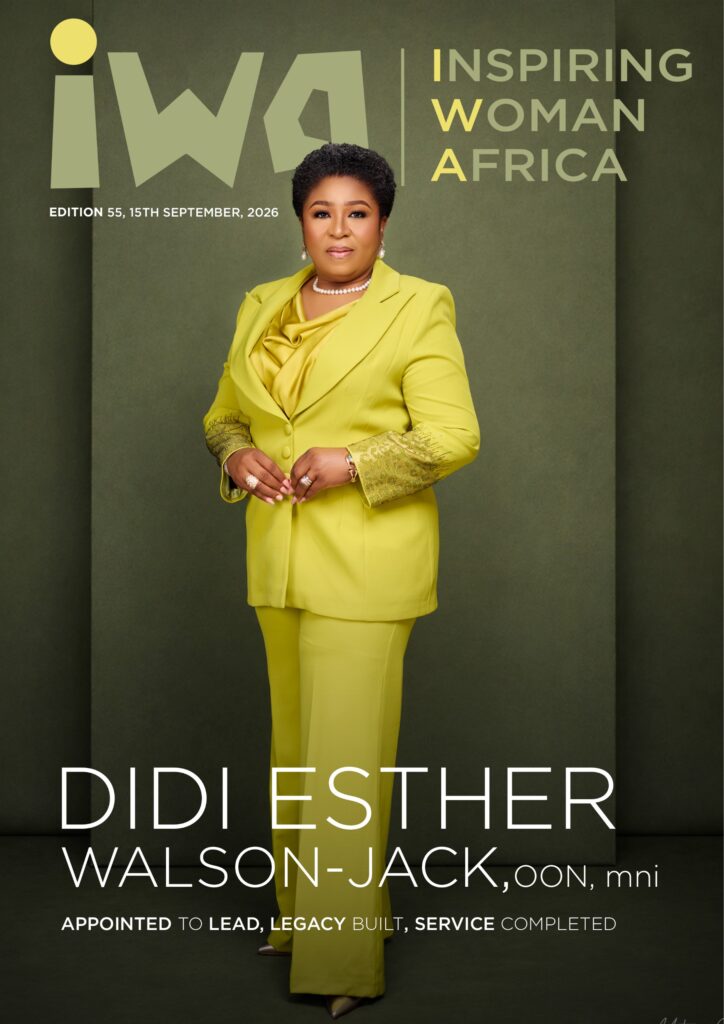
Didi Esther Walson-Jack, OON, mni — Appointed to Lead, Legacy Built, Service Completed
Latest Posts
-
 Sep 15, 2026 The Battles You Win by Refusing to Fight